Last updated on September 30th, 2026.
Fishing pliers are an important tool when hitting the water. They can remove a hook, cut a line or even the shank of a hook.
Disclaimer: All products in this guide are independently researched by our team. We only recommend products we believe in and never get paid for the reviews. Learn more about our review process here.
A quality pair of pliers is made of quality material that will last for years of hard use. Yet, different pliers have different features. If you want to use your pair in saltwater as well you should be looking at a pair that won’t rust.
In this test we’ll look at the best pliers for fishing money can buy considering different budgets. In the first part of the review we’ll check out freshwater pliers for fishing. The second part will present our top 3 saltwater choices. Let’s go!
Best Fishing Pliers Quick Answer List
Quick advice: For fly fishing, go for the LOON Iconic Tool Kit. For lifetime saltwater use, go for the Van Staal 6″ Titanium Pliers.
-
Best Aluminum Pliers: Dr. Slick Squall Fishing Plier
-
Best Grip: Goture Fishing Pliers
-
Best Long Nose: Booms H01 Scissors
-
Best for Fly Fishing: LOON Iconic Tool Kit
-
Best Side Cutters: Dr. Slick Barracuda Pliers
-
Best Handle Design: Bubba Blade 7.5 Inch
-
Best Reach: Gerber Magniplier 7.5 in Needle Nose
-
Best Lightweight: Simms Flyweight Plier
-
Most Exclusive: Van Staal 6″ Titanium Pliers with Leather Sheath
-
Strongest Pliers: Cuda Titanium Bonded
Table of Contents:
What to Look for in the Best Pliers?
Disclaimer: We source, test and review the best products in the market for you. We only recommend products we use ourselves. If you end up buying a product from one of the merchants, we might earn a commission at no extra cost for you.
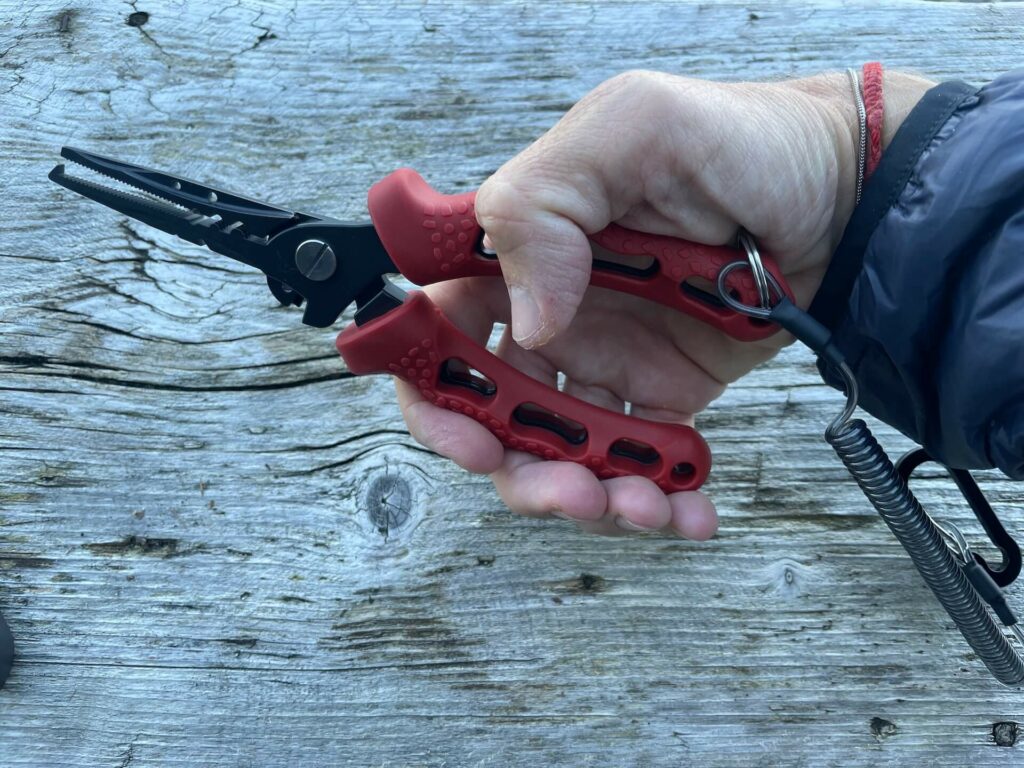
What to Look for in the Best Fishing Pliers?
If you are looking to buy a pair of pliers there are a number of features a quality pair should have.
Material
The choice of material is crucial when it comes to saltwater fishing. In such an environment you need pliers made of stainless steel, aluminum or even titanium. Aluminum needs to be of high quality as well as it could bend otherwise if too much pressure is applied. Aircraft grade aluminum is a good choice here.
Cutters
Fishing pliers come with different kinds of cutters. Here again it matters what kind of fishing you do and what kind of lines you intend to use. If you only cut monofilament or fluorocarbon, normal cutters will do. If however, you intend to cut braid for example you need cutters that are razor sharp. Extra strong side cutters can even cut the shank of a hook. A feature that can come in handy.
Length of the nose
The length of the nose decides over the possibilities when removing hooks. The longer the nose the easier it can handle hook deeper in the throat of a fish. Hence, the size of the fish you’re after matters. If you looking for saltwater use, fish tend to be bigger, hence you need longer nose pliers.
Split Ring Tool
A split ring tool is a cool however not crucial feature. It allows you to split rings of bigger hooks. This again can be an advantage when targeting bigger fish since the hook ring tends to get tougher to split by hand.
Grip
A solid grip is essential when dealing with pliers. It comes down to personal taste in the end as to what you prefer. We chose some with rubber and some with steel/aluminum/titanium handles. The design of the grip plays a role as well. Molded grips help you grip them tightly and add a level of security.
Lanyard & Sheath
A lanyard is mandatory if you fish on a boat or from a pier for example. A sheath can be a nice feature if you are carrying your pliers attached to your waders for example. It also enables you to always have them ready quickly when releasing a fish.
Best Pliers for Freshwater Fishing
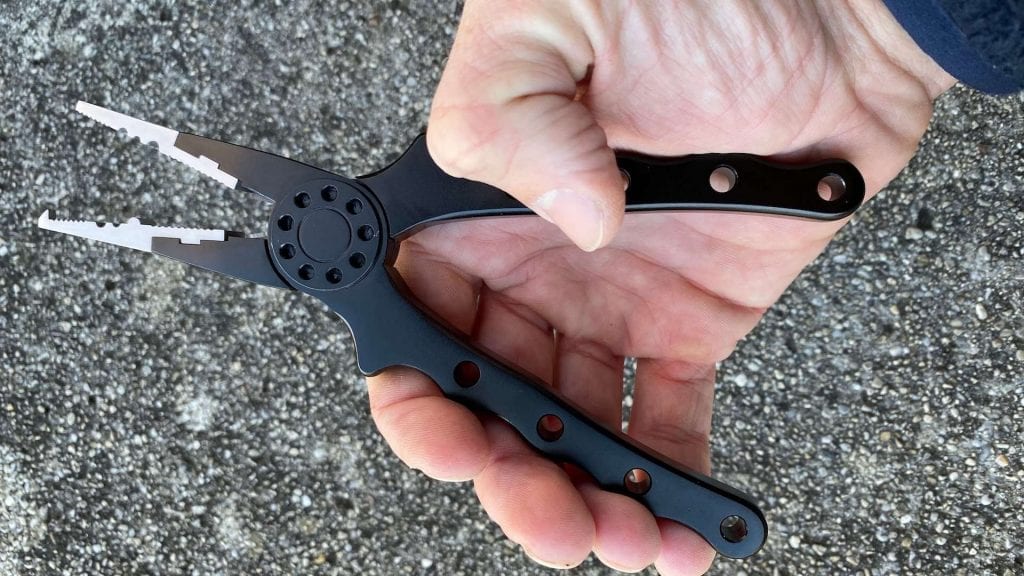
In this first part of the pliers review we’ll look at freshwater pliers. Here are our top three favorites that have different qualities.
Best Aluminum Pliers: Dr. Slick Squall Fishing Plier
Why we picked it:
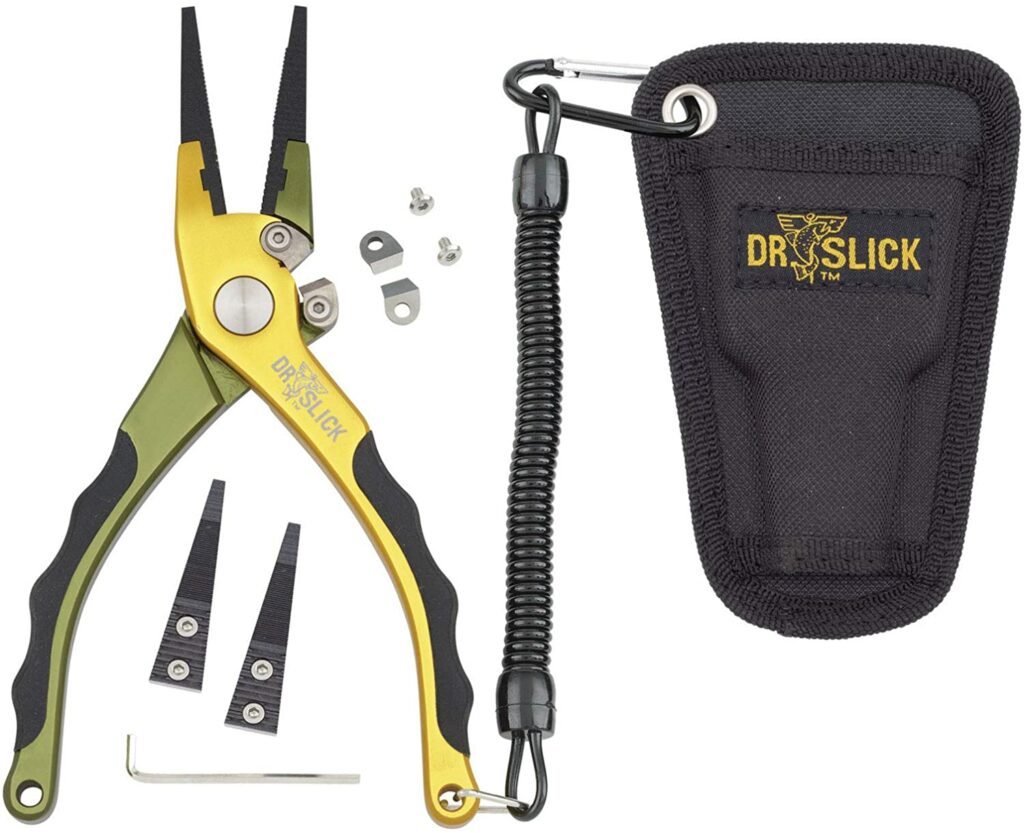
The Dr. Slick Squall Fishing Pliers are one solid tool. Made from aircraft-grade anodized aluminum, they feel very sturdy and are very comfortable to hold. The aluminum however gets cold in winter, a disadvantage compared to the the KastKing Cutthroat 7” we’ll talk about in a second.
The Dr. Slick Squall come with a handful of useful functions. First and foremost their stainless steel jaws can remove hooks and split rings. A spring keeps them open freely and makes them easy to use with one hand. Another feature that we found very useful are the tungsten carbide cutters. These fully replaceable cutters enable you to cut the strongest braided lines (up to 60lbs) , heavy mono leaders, fly lines and backing. You can even clip off the shank of a hook when fly fishing.
The Dr. Slick Squall Fishing Plier come in a nice nylon sheath with a coiled lanyard and can be easily attached to your waders using the belt loop clasp. Their form makes them very sturdy. The downside of this build is the shorter arms that aggravate removing a hook if a fish has taken the bait deep inside the throat.
PROS
-
Replaceable cutters
-
Comes with a lanyard and sheath
CONS
-
Aluminum handle gets cold in winter
GET THEM AT TRIDENT FLY FISHING
Best Grip: Goture Fishing Pliers
Why we picked it:
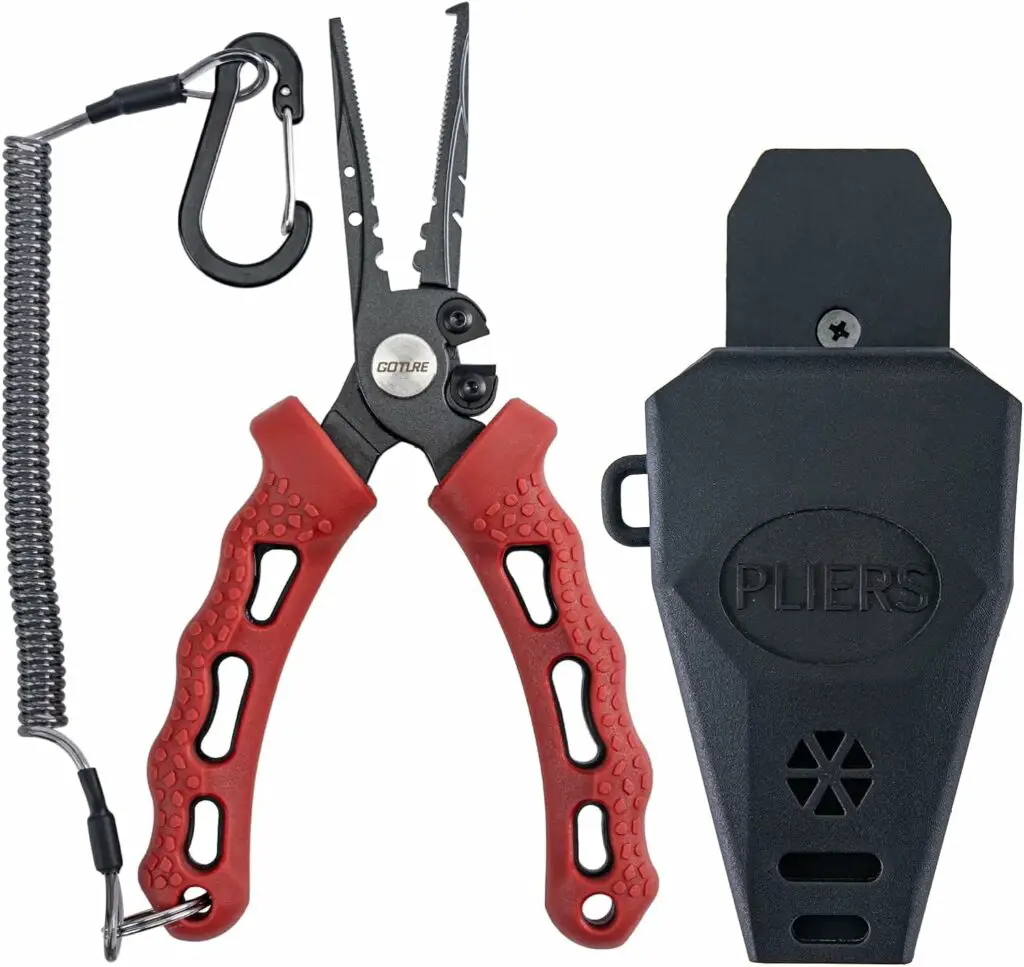
The Goture Fishing Pliers (read our in-depth review here) have a similar shape as the Piscifun pliers. The main difference is the material of the handles. The Goture Fishing Pliers come with rubber coated handles that feel very comfortable, especially on cold winter days. The material also makes them very slip-resistant. These are made from aluminum with a teflon coating.
The Goture Fishing Pliers are also equipped with carbide cutters. Other than the Piscifun, Goture Fishing Pliers places the carbide cutters on top of the jaws next to the handle. It probably comes down to personal preferences in daily life. We did not find one solution easier to use than the other.
The Goture’s jaws are also multifunctional, allowing you to grab and remove any fish hook with the serrated jaws. The crimping slots enable you to secure a split shot weight or build a steel leader. The Goture Fishing Pliers also feature a split ring tool that performed well during our test. Just like the Piscifun the Goture Fishing Pliers also comes with a sheath and a lanyard. You can clip it onto the belt of your waders and always have them ready to use.
PROS
-
Rubber handles provide excellent grip
-
Great value for money
CONS
-
Sheath material is quite hard and doesn’t last forever
Best Long Nose: Booms H01 Scissors
Why we picked it:
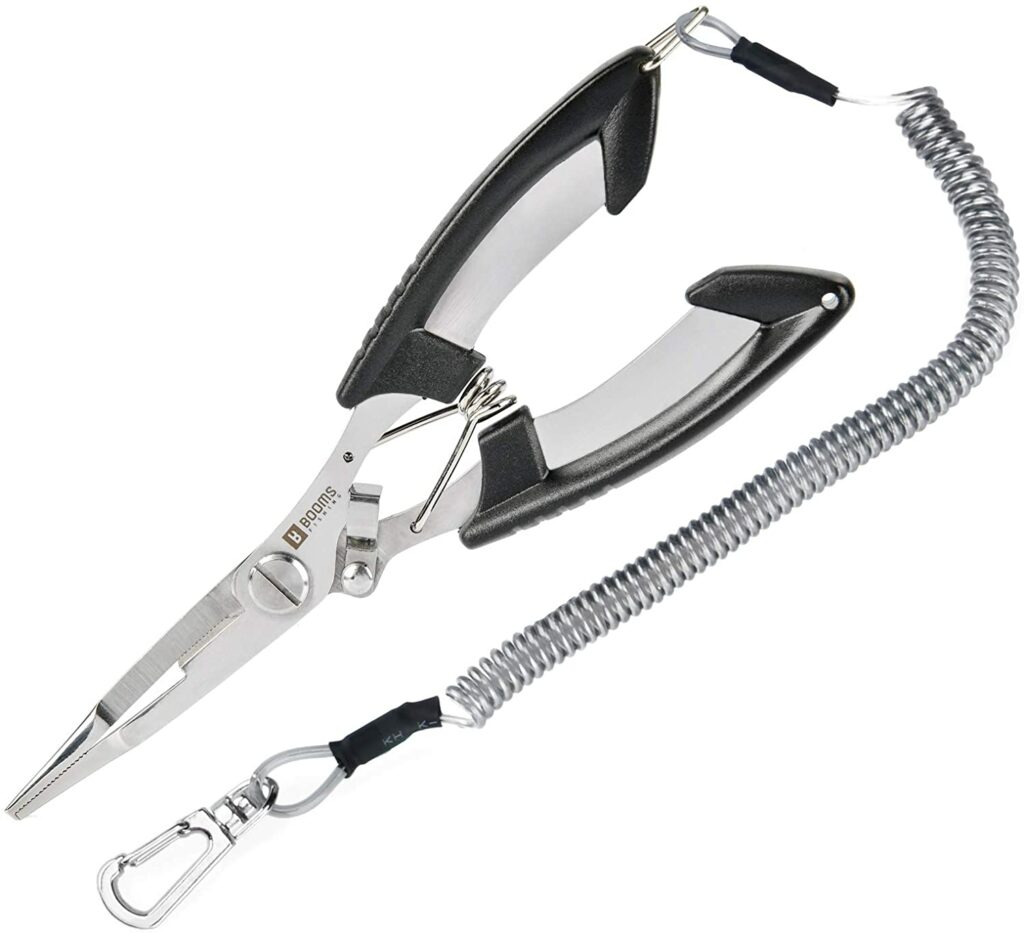
The Booms H01 Scissors are a great entry level pair of fishing pliers. They are our top choice when it comes to pliers with a longer nose making hook removal deep in the throat of a fish easier. The Booms Fishing H01 are made of 420 stainless steel. With their scissor cutters they cut anything from monofilament, fluorocarbon, braid and wire. They also feature a split ring tool.
The Booms H01 Scissors also come with a safety look and spring loaded for easy use. The lanyard can easily be attached to a fishing jacket or waders.
PROS
-
Longe nose enables deep hook removal
-
Spring load makes usage with one hand easy
CONS
-
No sheath included
Best for Fly Fishing: LOON Iconic Tool Kit
Why we picked it:
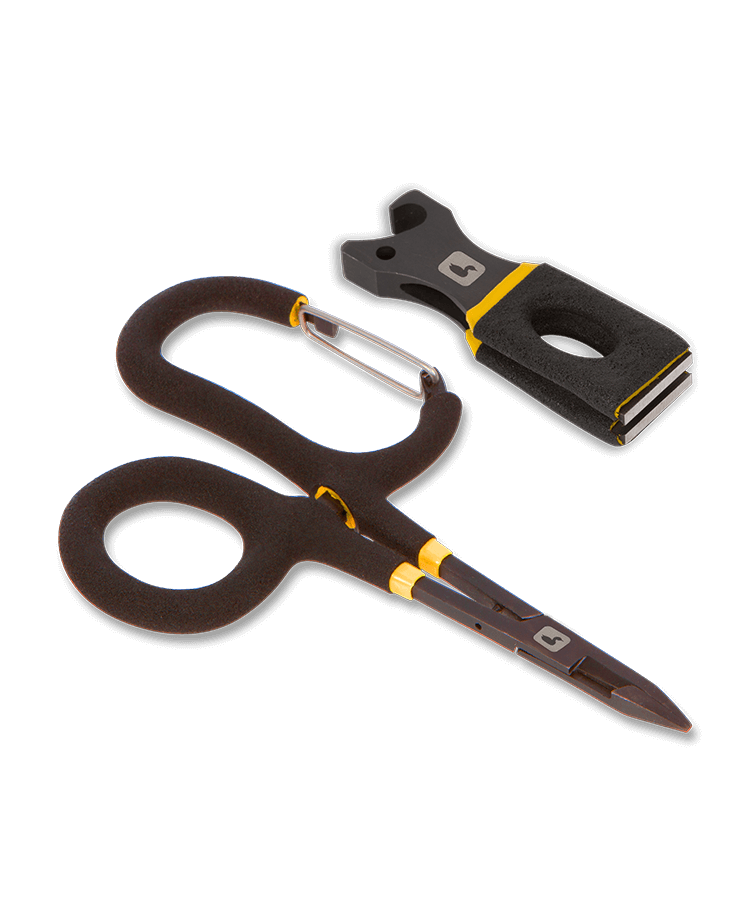
The LOON ICONIC TOOL KIT is a great choice for the minimalist angler who does not want to carry too much gear but is looking for a high quality pair of fly fishing pliers. The kit consists of two pieces: the Rogue Quickdraw forceps with rubber handles quickly release a hook when out fly fishing.
The LOON ICONIC TOOL KIT also includes a high-quality nipper that cuts even thicker tippets and leaders. To round off this great package, it comes with a lanyard for easy attachment on your fly fishing vest or fly fishing sling pack.
PROS
-
Small size means these pliers stow away easily in your wadersl
-
Rubber handles provide secure grip
CONS
-
Only for smaller species
-
Not built for heavy duty work
Best Side Cutters: Dr. Slick Barracuda Pliers
Why we picked it:
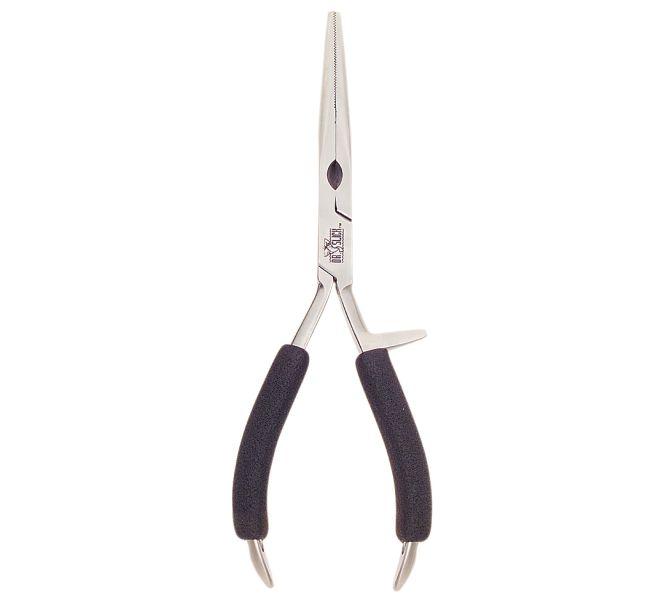
The Dr. Slick Barracuda Pliers are a great choice if you are looking for a slim but very strong pair of fishing pliers. Its long jaws make it easy to remove a hook from the mouth of a fish, even the ones with sharp teeth such as pike or barracuda. The integrated side cutters on the Dr. Slick Barracuda Pliers make cutting even thick leaders and tippets easy.
The Dr. Slick Barracuda Pliers come in two colors and feature anti-slip handles plus a safety bar on the top handle to ensure a safe grip in all environments and situations.
PROS
-
Slim design
-
Powerful side cutters
CONS
-
No lanyard, no sheath
Best Fishing Pliers for Saltwater 2026
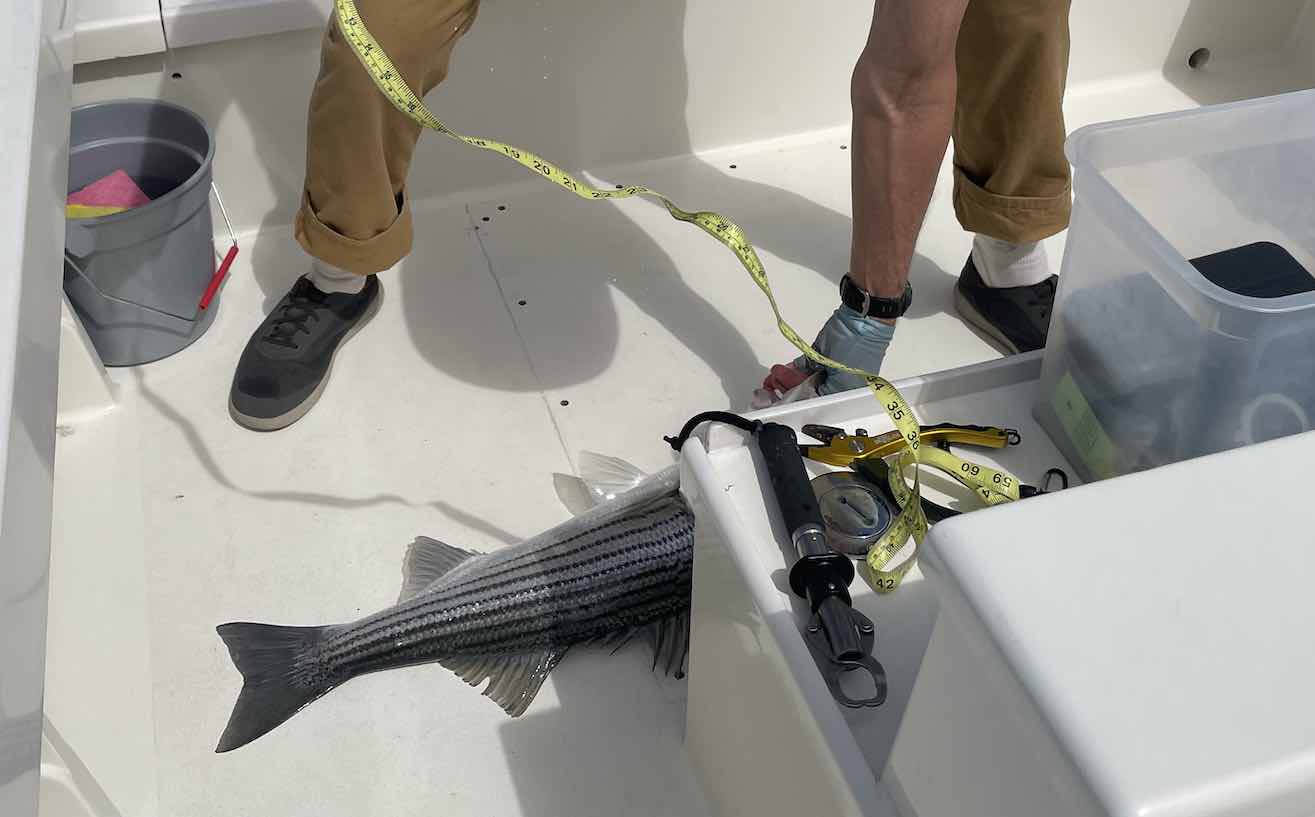
Saltwater pliers need an extra bit of sturdiness and corrosion resistance. As mentioned in the beginning of this article they are made of materials such as aluminum, stainless steel or titanium. They also need to be extra strong if you are targeting big fish.
Here are our top three saltwater fishing players. Like in the first part of this review we want to give you a range of options to choose from. That’s why we chose our favorites from the best fishing pliers for saltwater with different features.
Best Handle Design: Bubba Blade 7.5 Inch
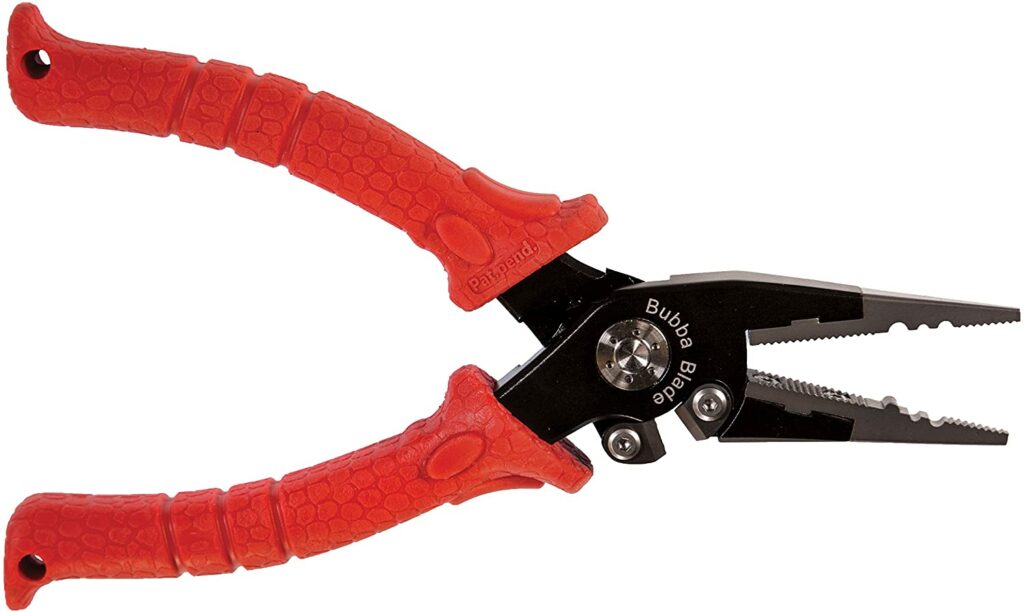
Why we picked it:
Bubba Blade has made a name for themselves in the fishing industry by their fish knives. But they also built great pliers for fishing, especially for saltwater use. The Bubba Blade 7.5 Inch is the right choice for heavy saltwater use. The Bubba Blade 7.5 Inch feature an excellent grip that prevents the pliers from slipping out of your hands. Made from aerospace aluminum and stainless steel jaws the Bubba pliers are very sturdy.
We like the fact that the Bubba Blade 7.5 Inch also feature side cutters and are spring loaded, making them easy to use with one hand. They come with a sheath for easy attachment to your waders or pants and a lanyard to prevent dropping them into the water.
PROS
-
Rock solid, non-slip rubber handles
-
Powerful side cutters cut anything from mono to braid
CONS
-
Rather short nose limits reach of the pliers
Best Reach: Gerber Magniplier 7.5 in Needle Nose
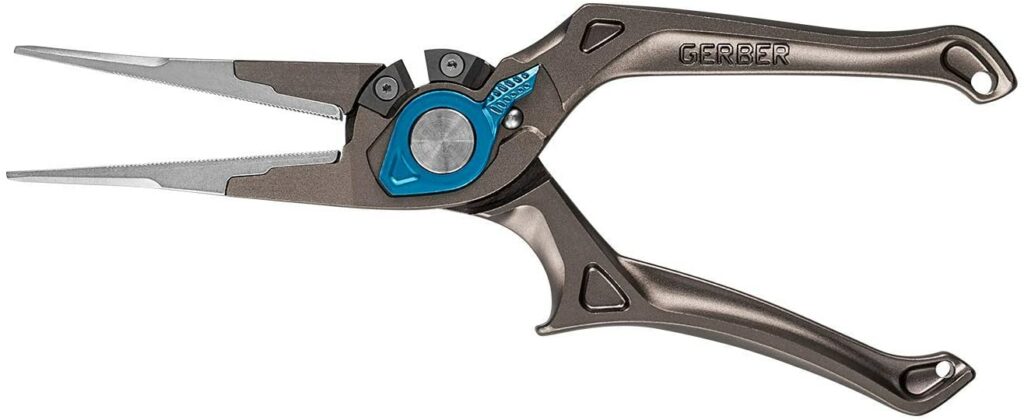
Why we picked it:
The Gerber Magniplier 7.5 in Needle Nose are an excellent choice as well when it comes to saltwater fishing pliers. Their needle nose tips stand out and provide extra reach to remove even hooks that are deep down in the fish’s throat.
The Gerber Magniplier 7.5 in Needle Nose are angled and off-axis from the pliers’ handle. This improves the line of sight and and makes removing hooks even easier as you see what you’re doing better.
The carbide cutters and jaws of the Gerber Magniplier are exchangeable and hence guarantee a long-lasting product. These pliers come with a sheath and lanyard as well.
PROS
-
Highly ergonomic handles for all-day use
-
Replaceable jaws
CONS
-
Not as slip resistant as the Bubba
Best Lighweight: Simms Flyweight Plier
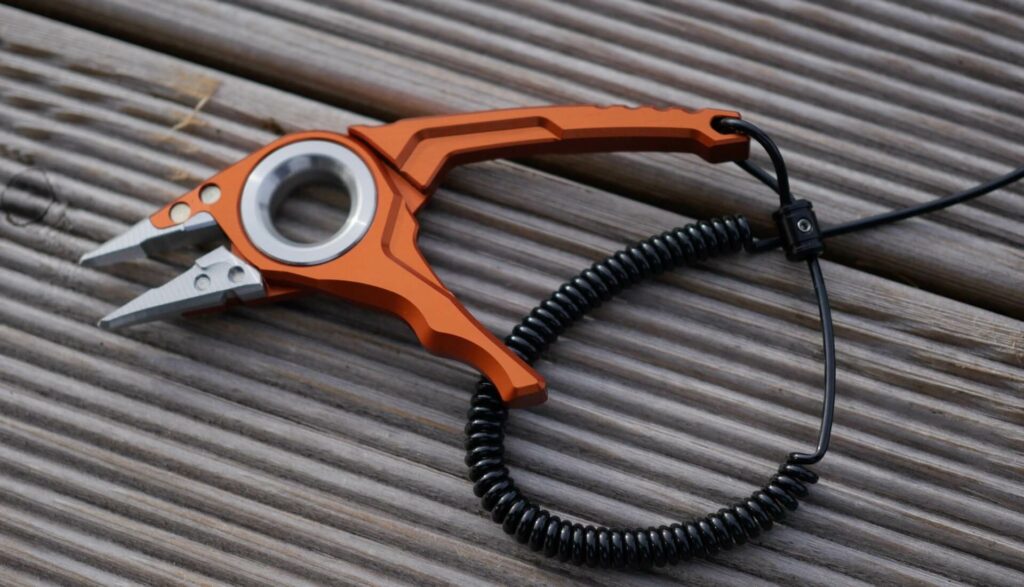
Why we picked it:
At $179.95 the Simms Flyweight (read our in-depth review of these pliers here) are certainly not for everyone. However, they are a great tool. The strength of the Simms Flyweight lies in their minimalistic design made from high end aluminum. This makes these incredibly light and yet incredibly strong. Spring loaded handles keep the pliers open and ready to use in a second.
The Simms Flyweight features strong cutters that have no problem cutting monofilament (they reach a limit on strong saltwater monofilaments though). The pliers come with a little holster that features a belt loop for easy attachment. A lanyard secures the pliers. These are built to last and an investment for a lifetime.
PROS
-
Extremely lightweight and easy to handle
-
Ergonomic design
-
Lanyard and holster included
CONS
-
Not ideal for big hands
-
Aluminum gets really cold in the winter
-
Cutters reach a limit on big monofilaments
Most Exclusive: Van Staal 6″ Titanium Pliers with Leather Sheath
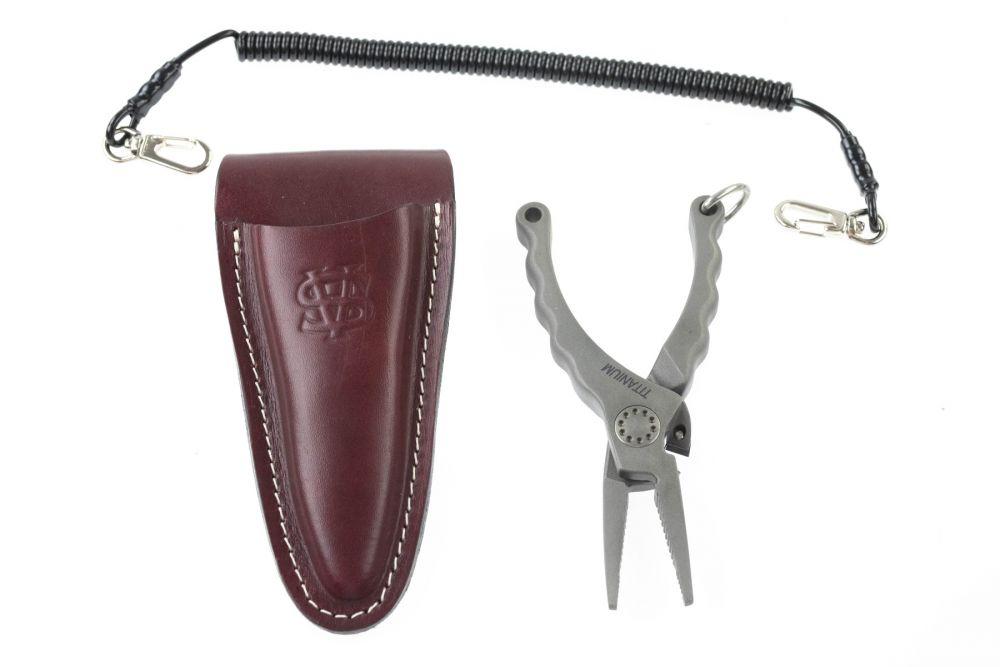
Why we picked it:
If you are looking for the ultimate pair of fishing pliers, look no further than the Van Staal 6″ Titanium Pliers with Leather Sheath. Made from corrosion-proof titanium they feature incredibly strong jaws. Spring-loaded handles make it easy to handle the Van Staal with one hand.
The tungsten cutters are replaceable to make these last for a lifetime. The lanyard ensures that you don’t use your Van Staals even if they accidentally drop out of the leather sheath. This plier is not cheap but worth every penny – also makes for a great fly fishing gift.
PROS
-
High-end feel with combination of titanium pliers and leather sheath
-
Strongest jaws in the test
CONS
-
Material gets cold in winter
Strongest Pliers: Cuda Titanium Bonded
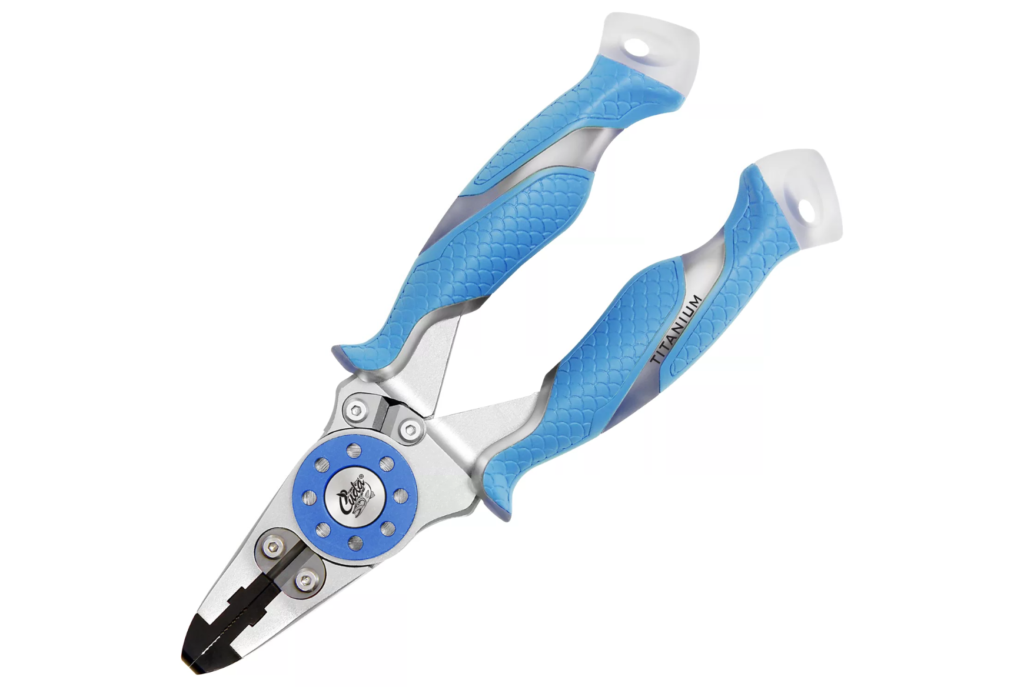
Why we picked it:
If you are looking for a heavy duty pair of fishing pliers to get any job done, look no further than the Cuda Titanium Bonded. A titanium bonded finish ensures durability and toughness in the harshest environments. At the base of the jaws, you’ll find super strong cutters that cut braided and mono fishing lines with ease.
Next to the handles an additional wire cutter on the Cuda Titanium Bonded makes sure there is no line tough enough to withstand the force of the cutters. They are replaceable after heavy use. The handles are coated with a non-slip pattern. The Cuda Titanium Bonded come with a nylon sheath and a lanyard so you don’t loose them on any of your fishing adventures.
PROS
-
These pliers will withstand any test
-
Non-slip rubber grip
CONS
-
A little bulky
Conclusion on the Best Pliers for Fly Fishing
As you can see from our review the options for a pair are vast. There are so many factors that influence your decision. The most important ones are: Are you going to use them in freshwater only or do you want to take them fishing in the sea as well? If you want to use them in saltwater make sure they are corrosion resistant so they won’t rust.
The amount of money you can spend on a pair also greatly varies. Entry level products that will get the job done start at around $15. If you want to get some of the best ones out there that will last you a lifetime, you can easily spend a couple of hundred dollars. A nice pair of pliers for fishing also always makes for a good fly fishing gift for a fishing friend.
Notice: We take part in the Amazon Associates Program and earn a small commission at no extra cost for you if you end up making a purchase. We only recommend products we are convinced of and use ourselves.
Our Expertise
Why you should trust us: For this review, Leonard Schoenberger and his team spent countless hours at the river and on a boat fishing for stripers, testing the most popular pairs of fishing pliers. By trying these products in different settings, we can be sure to catch their flaws and weaknesses. Our ultimate goal is to provide you with all the information you need to make a solid decision before purchasing. We always tell you our honest opinion about a product. We can do that since we never get paid for reviews and are proud of our editorial independence.
Fishing Plier FAQs
Why do I need specialized fishing pliers instead of regular pliers?
Fishing pliers are tailored for angling tasks. They often come with features like split ring tips, line cutters, and crimping notches. Their design allows for easy hook removal, cutting fishing line, crimping split-shot weights, and other fishing-specific tasks.
What material should I look for in top-quality fishing pliers?
Stainless steel and aircraft-grade aluminum are popular materials for fishing pliers due to their corrosion-resistant properties. If you fish in saltwater, it’s especially important to choose pliers made of corrosion-resistant materials or with a corrosion-resistant coating.
What is the purpose of the line cutter on fishing pliers?
The line cutter is designed to easily and cleanly cut fishing lines, including tougher braided lines. Some high-quality pliers come with tungsten carbide line cutters, which are particularly sharp and durable.
How important is the nose length on fishing pliers?
Nose length matters depending on your fishing style. Longer noses are beneficial for deep-sea fishing or when dealing with fish that have deep-set hooks, as they can reach deeper into a fish’s mouth. For general purposes, a standard nose length is usually sufficient.
How do I maintain and care for my fishing pliers?
After each use, especially in saltwater, rinse your pliers with fresh water. Dry them thoroughly and occasionally apply a light oil or silicone spray to keep the joints moving smoothly and to prevent rust.
Are spring-loaded fishing pliers beneficial?
Yes, spring-loaded pliers allow for one-handed operation, which can be incredibly useful when you’re holding a rod or a fish in your other hand. They automatically open when pressure is released, making them more user-friendly.
What are split ring pliers and do I need them?
Split ring pliers have a small hooked end designed to help open split rings, making it easier to change out hooks, lures, or other tackle. If you frequently swap out or replace hooks and lures, these can be a valuable feature.
What’s the difference between needle-nose and bent-nose pliers?
Needle-nose pliers have a straight, elongated nose which is great for general tasks and reaching into tight spaces. Bent-nose pliers have a curved or bent tip, providing different angles that can be useful for hook removal or intricate tasks. Your choice largely depends on personal preference and the specific situations you encounter while fishing.
A fishing plier earns its keep two ways: it gets a hook out of a fish without slowing the release, and it survives the environment that fish lives in. Those two jobs split the category cleanly. Freshwater pliers can be built almost any way that closes on a hook and cuts line, because they only meet fresh water and they dry between trips. Saltwater pliers fight a chloride-rich electrolyte that pits unprotected steel within hours of immersion, and a single bad alloy choice turns a $40 tool into a fused lump by season three.
The job description tightens further if you fish catch-and-release. A barbed hook in the corner of a trout’s jaw comes out fast with a needle nose and a 90-degree twist. A streamer hook buried past the gill plate of a striper needs reach, and the wrong angle is the difference between a clean release and a fish you keep upside-down past its tolerance. Hook-removal time is the variable that matters under thermal stress (trout in water above 68 degrees Fahrenheit are highly stressed and frequently die after release even at short fight times), and a plier that lets you finish a release in five seconds instead of thirty is worth more than its price tag suggests.
Disclaimer: All products in this guide are independently researched by our team. We only recommend products we believe in and never get paid for the reviews. Learn more about our review process here.
Steel, aluminum, titanium: what the metallurgy actually does
The frame and jaw material decides whether the plier survives saltwater, how much it weighs in your hand all day, and how much force the jaw can apply before deforming. The three materials in the category each solve a different part of that equation, and the cheap option is not always the wrong option if you fish fresh.
Stainless steel comes in a wide range of grades, and the grade is what determines saltwater behavior. The 400-series stainless used in most budget pliers (often labeled “420 stainless” or simply “stainless”) is martensitic, hardenable, and will hold an edge on a cutter, but it pits in saltwater because its chromium content sits at the low end of the corrosion-resistant range. The 300-series stainless (304, 316) is austenitic, much more chromium-rich, and survives saltwater spray for years if rinsed. 17-4 stainless, used in higher-end pliers like Hook-Eze and some Bubba models, is a precipitation-hardened alloy that combines saltwater corrosion resistance with hardness close to tool steel.
Aircraft-grade aluminum (6061-T6 and 7075-T6 are the common alloys) is what most mid-tier saltwater pliers are built from. Aluminum forms a passive oxide layer that resists corrosion well in salt environments, and the alloy is roughly a third of the weight of stainless steel for the same volume. The trade-off is yield strength: aluminum will deform under loads that stainless shrugs off, which is why aluminum-framed pliers almost always carry stainless steel jaws rather than aluminum jaws. The other trade-off is thermal: aluminum is a far better thermal conductor than steel, so an aluminum-handled plier in February or in saltwater spray on a cold morning will cold-soak a bare hand within minutes.
Titanium is the corrosion-proof option. Grade 5 titanium (Ti-6Al-4V, the same alloy used in aerospace and surgical implants) forms a passive titanium dioxide layer that does not pit in chloride, does not rust, and does not lose strength after years of salt immersion. It is also roughly 40 percent lighter than stainless steel at equivalent strength. The Van Staal titanium pliers and the Danco Premio titanium pliers occupy this tier, and they cost what they cost because Grade 5 titanium is hard to machine. If you fish saltwater forty days a year and you can absorb the spend, the lifecycle math works out. If you fish saltwater four times a year, a 6061-T6 aluminum frame with stainless jaws plus a freshwater rinse routine will deliver the same outcome.
The jaw cutter is its own metallurgy story. The line you actually struggle to cut is braid, because braided lines (Spectra, Dyneema) are made from ultra-high-molecular-weight polyethylene fibers with a tensile strength per diameter that exceeds steel. A standard stainless cutter dulls on braid within a season. Tungsten carbide cutter inserts (used on Dr. Slick Squall, Goture, Cuda Titanium Bonded, Van Staal) are sintered powder-metal cutters with hardness around 90 on the Rockwell A scale, and they cut braid cleanly for years. Tungsten carbide is brittle in shear, so when it does fail it chips rather than rolls, which is why the higher-end pliers in this guide use replaceable carbide inserts: the cutter is a wear part by design, and you change it instead of the plier. For fly fishing, use dedicated nippers for tippet cuts and reserve pliers for hook work; the two tools serve different cutting jobs.
Jaw geometry, spring return, retention
Once the material is right, the variables that change how the plier feels under a fish are jaw shape, jaw length, return mechanism, and how the tool stays attached to you.
Nose length trades reach for precision. A short nose (3 to 4 inches like the Dr. Slick Squall) is rigid, holds alignment under load, and gives a precise grip on a small hook at the lip of a trout. A long needle nose (5 to 7 inches like the Booms H01 or the Gerber Magniplier) reaches a hook set deep in the throat of a striper or a pike, which is the whole game in saltwater and toothy-fish freshwater. The cost of a long nose is flex: a 7-inch needle nose loaded sideways will yield before a short jaw does, and a cheap long-nose plier can spread permanently after one bad pry.
The opening notch for split rings is a small detail with a real ergonomic payoff. Hard plastic lures, jigs, and most saltwater hooks are mounted to the line via split rings, and opening a split ring with a fingernail on a cold morning is how anglers lose fingernails. A pliers with a side-cut split-ring tine (Dr. Slick Squall, Goture, Booms H01 all have this) holds the ring open while you slide the new hook in. Without it, you reach for a separate dedicated split-ring plier, which is the Texas Tackle Executive in most tackle bags.
Side cutters built into the jaw next to the pivot deliver enormous mechanical advantage because they sit close to the fulcrum. The same hand pressure that closes the jaw tips on a hook will shear braid, fluorocarbon, mono, or in the case of tungsten-carbide-equipped pliers, the shank of a hook. The shank-cut matters for fly fishing specifically: when a fish is hooked through the eye, the gill, or any soft tissue where pulling the hook out would do more damage than leaving it, the correct release move is to cut the hook shank and back the bend out, leaving the eye to dissolve. Without a side cutter that can shear hardened wire, that move is not available to you.
Spring-loaded handles open the plier automatically when you release grip pressure, which sounds like a small convenience until you are holding a wet fish with one hand and the plier with the other in a current. Every plier in the saltwater tier of this guide is spring-loaded for that reason. Gravity-return designs (the plier opens because the lower handle hangs down) work fine on a boat deck where you can drop the plier into a cleat-mounted holder, but they are clumsier on a wading belt.
Retention is the final variable. A plier without a lanyard and a sheath is a plier you will lose to the bottom of the river within a season, especially if you fish from a boat or wade in moving current. The standard rig is a coiled tether (like a phone-cable coil, but braided steel or coated steel cable for saltwater) clipped to a sheath ring on the plier and to a D-ring on a wading belt, a vest, or a sling pack. Leather sheaths look beautiful and dry well (the Van Staal sheath is the genre-defining example) but require rinsing if you use them in saltwater. Nylon sheaths shed water faster and survive abuse better.
Sub-categories worth knowing
The category splits three ways. Most anglers only need a plier from one of the three; some fish all three.
Saltwater pliers
Saltwater is the hard environment. Chloride attacks unprotected steel, salt spray gets into every pivot, and the fish are larger so the hooks are larger and the jaw needs more bite. The minimum-viable saltwater plier has either 316-grade or 17-4 stainless steel construction, aircraft-grade aluminum (6061 or 7075) with stainless jaws, or titanium throughout. It has tungsten carbide cutters because saltwater braid is the cutting load that defines the category. It has spring-loaded handles and a coil tether because losing a $200 plier overboard in 40 feet of water hurts. The picks in this guide that hit this spec: Bubba Blade 7.5, Gerber Magniplier, Simms Flyweight, Van Staal Titanium, Cuda Titanium Bonded.
Fly fishing pliers
Fly fishing pliers are a specialist subset. The fish are smaller (trout, panfish, smaller bass), the hooks are smaller (size 14 dries down to size 22 midges), and the release pressure is high because most fly fishing is catch-and-release and most fly anglers fish barbless or pinched-barb hooks specifically to make release fast. The plier here is lightweight, has a fine straight needle nose to grip a size 18 hook bend, and often pairs with a separate nipper tool for cutting tippet. The Loon Iconic Tool Kit in this guide is the archetypal fly fishing tool set: a small forceps plier plus a nipper, designed to clip to a fly fishing vest and never weigh you down. If you fly fish exclusively, also read the dedicated best fly fishing nippers guide.
Heavy-tackle pliers
The third subset is the big-fish plier: large hooks, heavy split rings, braided main lines in 50-pound class and up, and fish that will run a tool through a high-load cycle that lighter pliers will not survive. The Cuda Titanium Bonded sits in this slot in the guide because it carries a titanium-bonded coating over a stainless body, oversized side cutters, and a frame that does not flex under offshore-class loads. Heavy-tackle pliers are also the right tool for pike and musky fishing in freshwater, where the hook is large, the toothy mouth is dangerous to a bare hand, and the nose needs to reach past sharp teeth.
Best pliers for saltwater fishing
A saltwater plier earns the saltwater label by what it does not do: it does not pit, it does not seize at the pivot, and its cutter does not roll on braid by week three. The picks below have been tested in salt by Leonard and the team across multiple seasons on the New England striper coast and on flats trips. The price range across the saltwater tier runs from roughly $80 (Bubba Blade) to $400-plus (Van Staal Titanium). The decision is rarely about which one cuts best (they all cut acceptably with tungsten carbide inserts) and almost always about how often you fish salt and how attached you are to spending less than $100 once versus owning a tool for life.
How to choose
Three questions, in order, get you to the right plier without re-reading the guide.
First: freshwater only, or saltwater? If freshwater only, you can stop at the freshwater tier of this guide. The Dr. Slick Squall and the Goture both carry tungsten carbide cutters, both come with a sheath and a lanyard, and both will outlast the average angler’s interest. If saltwater is on the table at all, jump to the saltwater tier even if you fish salt only occasionally, because the corrosion penalty for using the wrong tool in salt is paid once and is unrecoverable.
Second: how deep does the hook go? If you fish artificial lures with treble hooks at the lip of the fish, a short, rigid nose (Dr. Slick Squall, Simms Flyweight) handles the release in seconds. If you fish bait, swallow hooks, or species like pike, musky, striper, and bluefish that take the hook deep, a 6-to-8-inch needle nose (Booms H01, Gerber Magniplier) is the right tool. Anything you intend to fish for fly with size 14 hooks and smaller, the small Loon forceps in the kit is what you reach for.
Third: how do you carry it? If you fish from a boat with a tool holder cleated to the deck, retention is solved at the boat level and almost any sheath works. If you wade or fish from a kayak, the lanyard plus sheath plus belt-loop or D-ring deploy is what keeps the tool out of the water column. The Simms Flyweight ships with the cleanest belt-loop sheath in this guide; the Bubba 7.5 sheath is the sturdiest under abuse; the Van Staal leather sheath is the one you show off.
Entry-level workable pliers start around $15. Lifetime tools start around $200. A solid mid-tier pick for most anglers lands between $40 and $100. The picks above are spread across that range deliberately.
What brand of pliers is best?
There is no single best brand because the category splits across freshwater, saltwater, fly fishing, and heavy tackle, and no brand wins all four. For lifetime saltwater use the answer is Van Staal (titanium, $400 tier) or Danco Premio (titanium, $180 tier). For value-tier saltwater the answer is Bubba Blade or Cuda. For fly fishing the answer is Loon, Simms, or Dr. Slick. For freshwater general-purpose the value pick is Goture or Piscifun; the upgrade pick is Dr. Slick Squall. The honest framing is that any plier built from the right alloy with tungsten carbide cutters will outperform the wrong-alloy version of a fancier brand.
Are fishing pliers worth it?
If you fish more than a handful of times a year, yes. A dedicated fishing plier is faster on hook removal than any general-purpose tool, which matters when a fish is in your hand and time-to-release is the variable that decides whether it swims away cleanly. The split-ring tine, the side cutter sized for fishing line, the spring return, the corrosion-resistant alloy, and the sheath-and-lanyard retention together solve problems that a hardware-store pliers does not solve. The break-even on a $30 to $60 plier is usually one season.
What is the difference between fishing pliers and regular pliers?
Four differences. First, the alloy: fishing pliers in any tier above entry-level use stainless, aluminum, or titanium specifically for corrosion resistance, while hardware pliers are usually carbon steel that rusts in any humid environment. Second, the cutter: fishing pliers carry tungsten carbide or hardened stainless cutters tuned for braided fishing line, while standard pliers cut electrical wire which has very different properties. Third, the jaw: fishing pliers have a needle-shaped jaw built to reach into a fish’s mouth, and most have a side-cut notch for split rings. Fourth, the carry system: fishing pliers ship with a sheath, a lanyard, and often a spring return, all of which solve the carry-on-water problem that hardware pliers were never designed for.
What is the best fishing tool?
If the question is “if I can only carry one tool”, the answer for most anglers is a medium-length spring-loaded needle nose plier with tungsten carbide side cutters, a split-ring tine, and a sheath-with-lanyard. The Goture and the Dr. Slick Squall in this guide both fit that description at the value tier, and the Bubba 7.5 and the Simms Flyweight fit it at the upgrade tier. If you fly fish, the answer is the Loon Iconic Tool Kit (plier plus nipper). If you fish saltwater seriously, the answer adds a corrosion-proof frame, which means titanium (Van Staal) or 17-4 stainless or aluminum-with-stainless-jaws.

Leonard Schoenberger is a fly fishing professional and gear specialist with over 20 years of experience on the water. As the manager of Heidarvatn, a world-class sea trout lodge in Iceland, his product recommendations and tactical advice are tested in some of the most demanding conditions on earth. His expertise has been mentioned in The New York Times, the Financial Times, and at the Outdoor Media Summit.